Nature & Wildlife
Flamingos of Laguna de Oviedo: A Birdwatcher's Guide to Jaragua
Discover the vibrant American Flamingos of Laguna de Oviedo. Our guide covers the best times and ways to witness this spectacle in Jaragua National Park.
An Emerald Jewel in the Dominican Southwest
Tucked away in the Dominican Republic's remote Pedernales province lies a natural treasure of global importance: Laguna de Oviedo. This vast, hypersaline lagoon is the shimmering centerpiece of Jaragua National Park, a region celebrated for its raw, untouched beauty and incredible biodiversity. Far from the bustling resorts of the east, the southwest offers a glimpse into a wilder, more serene Caribbean, where nature dictates the rhythm of life and adventure awaits around every corner.
As you approach the lagoon, the landscape transforms. The dry forests of the park give way to a sprawling expanse of emerald and turquoise water, dotted with dozens of small cays and fringed by dense mangrove forests. The air is thick with the scent of salt and the sound of distant bird calls, a symphony of the wild. This is a place that feels ancient and pristine, a sanctuary for wildlife and a breathtaking destination for travelers seeking authentic natural experiences away from the crowds.
Jaragua National Park: A Caribbean Biosphere Reserve
Established in 1983, Jaragua National Park is the largest protected area in the Dominican Republic and a core component of the Jaragua-Bahoruco-Enriquillo UNESCO Biosphere Reserve. Its immense territory protects a mosaic of ecosystems found nowhere else in this combination on the island, from arid scrubland and thorny dry forests to vital coastal marine habitats, including seagrass beds and pristine coral reefs.
The park's significance extends far beyond its stunning landscapes. It is a critical refuge for numerous endemic and threatened species, including two species of iguana and multiple rare birds. Its protected status helps preserve the unique flora and fauna of Hispaniola, making it a living laboratory for scientists and a paradise for ecotourists. Every visit to Jaragua is a step into one of the Caribbean's most important and spectacular conservation areas.
The Star of the Show: The American Flamingo
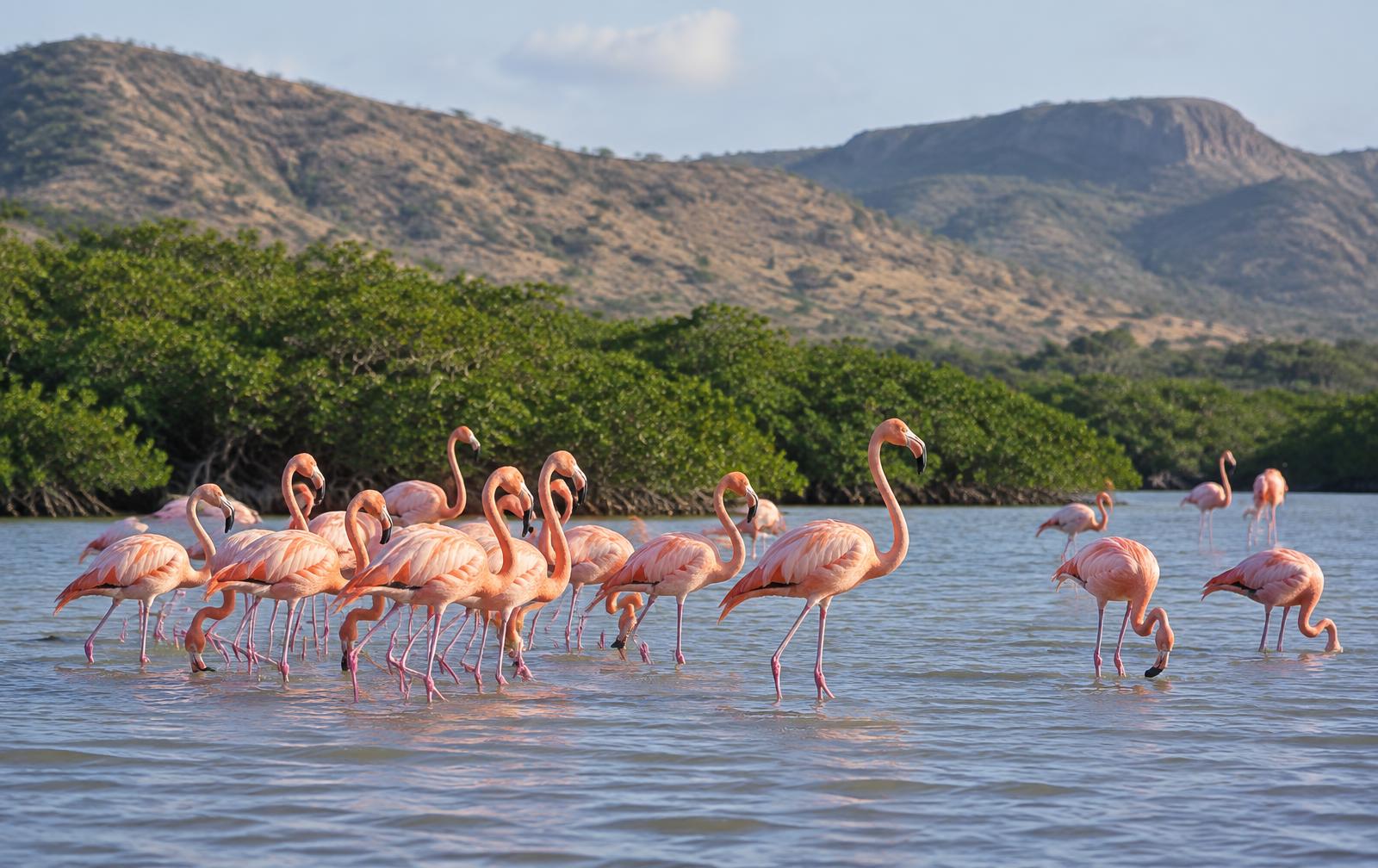
While Jaragua is home to a wealth of wildlife, the undisputed star is the American Flamingo (*Phoenicopterus ruber*). These magnificent birds, with their vibrant pink and crimson plumage, long sinuous necks, and iconic hooked bills, create a stunning visual against the lagoon's milky-green waters. They are highly social creatures, often gathering in large, noisy flocks that can number in the hundreds or even thousands, creating a breathtaking spectacle of color and sound.
Laguna de Oviedo provides the perfect habitat for them. The lagoon's extreme salinity supports a massive population of brine shrimp and other small invertebrates, the primary food source for flamingos. It's this diet, rich in carotenoid pigments, that gives them their brilliant, world-famous color. Watching them feed, with their heads upside down in the water as they filter their meals, is a fascinating display of natural adaptation you won't soon forget.
When is the Best Time to See Flamingos?
The great news for visitors is that American Flamingos are resident birds in Laguna de Oviedo, meaning they can be seen year-round. However, the size and visibility of the flocks can fluctuate depending on the season, water levels, and breeding cycles. Generally, the most impressive congregations are often observed during the cooler, drier months, from late fall through spring (approximately November to May).
During this period, the birds are often more concentrated in specific feeding areas, making them easier to spot on a guided boat tour. Early morning or late afternoon excursions are typically recommended, not only to avoid the midday heat but also because the birds are often more active during these times. The soft, golden light of morning and evening also provides the most spectacular conditions for photography, allowing you to capture the flamingos in all their glory.
Exploring the Lagoon: A Guided Boat Tour
The only way to truly experience the vastness of Laguna de Oviedo and get respectfully close to the flamingo colonies is by boat. Local guided tours depart from the visitor's center near the town of Oviedo, taking you across the saline waters. An experienced local guide is essential, as they know the lagoon's shallow channels and the specific locations where the flamingos are likely to be feeding on any given day, ensuring a successful and safe outing.
A typical tour involves navigating through serene mangrove tunnels and across the open lagoon to the main flamingo observation points. Many tours also include a stop at one of the cays, famously known as 'Iguana Island,' where you can walk among a healthy population of rhinoceros iguanas (*Cyclura cornuta*), another protected native species. This combination provides a rich, multi-faceted wildlife experience in just a few hours, showcasing the park's diverse inhabitants.
Beyond Flamingos: A True Birdwatcher's Paradise
While flamingos may steal the spotlight, Laguna de Oviedo is a premier destination for any serious or casual birdwatcher. The area is a designated Important Bird Area (IBA) and hosts a recorded list of over 70 species of birds, both resident and migratory. As your boat glides across the water, keep your binoculars ready for a dazzling array of avian life that makes this one of the top birding spots in the Caribbean.
You can expect to see elegant Roseate Spoonbills with their unique flat bills, various species of herons and egrets (including the Great Blue Heron and Snowy Egret), White Ibis, and numerous shorebirds foraging along the mudflats. The surrounding dry forest is also home to Hispaniolan endemic treasures like the Hispaniolan Parrot and the Hispaniolan Woodpecker, making a trip here a comprehensive birding adventure for enthusiasts of all levels.
Planning Your Visit to This Remote Paradise
A trip to Laguna de Oviedo requires some planning, given its location in the beautiful and remote southwest. From the Cabo Rojo and Pedernales area, the lagoon is an accessible and highly rewarding day trip. It's crucial to come prepared for the Caribbean sun and heat. Essential items include a wide-brimmed hat, high-SPF sunscreen, sunglasses, plenty of drinking water, and of course, your camera and binoculars.
To ensure a safe, informative, and respectful experience, booking a tour with a professional operator like Cabo Rojo Tours is your best option. We handle all the logistics and provide knowledgeable, multilingual guides available in English, Spanish, German, French, Italian, and Portuguese who are passionate about the park's ecology. This allows you to simply immerse yourself in the natural wonder of Jaragua, contributing to sustainable tourism that supports local communities and vital conservation efforts.
Ready to Witness the Spectacle?
Don't just read about the flamingos of Laguna de Oviedo—see them for yourself. Join our expert guides on an unforgettable boat tour through the heart of Jaragua National Park.
Book Your Laguna de Oviedo Tour