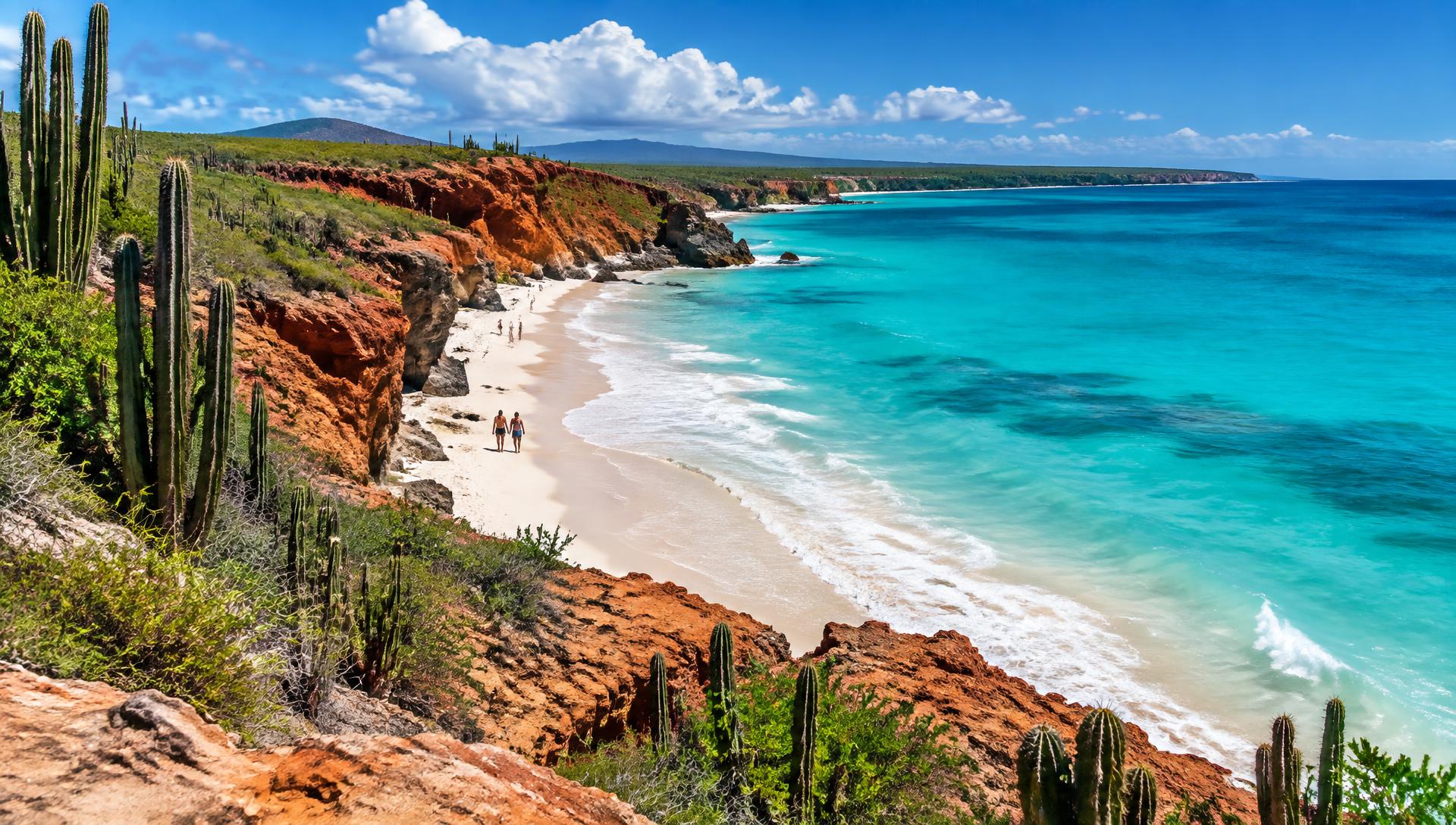
Beaches & boats
Take the boat to Bahía de las Águilas, swim at Playa Cabo Rojo and snorkel the reefs off Jaragua.
Wildlife & nature
See flamingos and iguanas at Laguna de Oviedo, hike Jaragua's dry forest and drive up to Hoyo de Pelempito.
Culture & sunsets
Eat fresh fish in Las Cuevas, explore Pedernales town and watch the sunset from the red cliffs.
Unforgettable Sights of Cabo Rojo
The region’s appeal lies in its dramatic contrasts. The star attraction, Bahía de las Águilas, is a pristine white-sand beach with turquoise waters, accessible only by boat or a rugged 4x4 trail through Jaragua National Park. This park also hosts Laguna de Oviedo, a saltwater lagoon that is a critical habitat for American flamingos, iguanas, and numerous bird species. Inland, the landscape rises sharply into the Sierra de Bahoruco mountains, where you’ll find the stunning Hoyo de Pelempito viewpoint, a deep geological depression often filled with a cool mist. The area's namesake red cliffs, best viewed near the port, create a spectacular coastal panorama, especially at sunset. Exploring these sites reveals a biodiversity and geological uniqueness found nowhere else in the Caribbean, offering a true sense of discovery away from the crowds. Each location provides a different facet of the Dominican Republic’s wild, untamed beauty.
Best Time & Conditions to Visit
Cabo Rojo enjoys a dry, sunny climate year-round, making it an excellent destination anytime. However, the prime season is generally from December to April, when rainfall is minimal and temperatures are pleasantly warm, creating perfect conditions for beach days at Bahía de las Águilas and clear snorkeling visibility. The shoulder months of May and November can also be wonderful, offering fewer visitors and lush, green landscapes after the rains. From June to October, temperatures are higher and there's a greater chance of afternoon showers, but they are often brief. For boating, morning excursions are highly recommended as the sea is typically calmer. Regardless of when you visit, the sun is intense, so packing high-SPF sunscreen, a wide-brimmed hat, and sunglasses is essential for comfort and protection while you explore this ruggedly beautiful corner of the country.
Getting to Attractions from Pedernales & the Port
Most excursions start from the town of Pedernales or the new Port Cabo Rojo area. Pedernales, the provincial capital, serves as the main hub for lodging and services. From here, our private tour vehicles can reach the Port Cabo Rojo departure point for Bahía de las Águilas in about 25 minutes. The boat trip from the port to the famous beach itself is a scenic 15-20 minute ride. To visit Laguna de Oviedo, the drive east from Pedernales takes around 45 minutes. For the mountain viewpoint of Hoyo de Pelempito, the journey is a more rugged inland drive of about 1.5 to 2 hours. Our guided tours handle all transportation logistics, ensuring a safe and comfortable journey. While the international Cabo Rojo Airport (CBJ) is expected to open in the future, all current travel is by road, with private transfers arranged by us for local travel or our sister site for airport arrivals elsewhere.
Practical Tips for Your Cabo Rojo Trip
To make the most of your adventure in this remote region, a little preparation goes a long way. Carry Dominican Pesos (DOP) in cash, as ATMs are scarce and many local businesses, including small restaurants and souvenir shops, do not accept credit cards. Sun protection is non-negotiable; pack reef-safe sunscreen, a hat, and polarized sunglasses. Lightweight clothing is ideal, but bring a long-sleeved shirt for sun protection and sturdy walking shoes for uneven trails. Insect repellent is a must, especially for visits to Laguna de Oviedo. Stay hydrated by bringing a reusable water bottle, which also helps minimize plastic waste in this pristine environment. While Spanish is the local language, booking a tour with us ensures you can have a guide in English, German, French, Italian, or Portuguese, making communication seamless and enriching your experience.
Park Rules & Responsible Travel
The stunning beauty of Cabo Rojo lies within protected areas like Jaragua and Sierra de Bahoruco National Parks. To preserve them for future generations, all visitors must follow key guidelines. Practice a "leave no trace" policy: all trash you bring in must be packed out. It is strictly forbidden to touch, feed, or disturb wildlife, including the iguanas on the islands of Laguna de Oviedo and the nesting seabirds. Do not remove any natural elements, such as shells, coral, stones, or plants. We strongly recommend using reef-safe sunscreen to protect the fragile marine ecosystems. By hiring certified local guides through a reputable operator like Cabo Rojo Tours, you not only gain valuable insight but also ensure your visit complies with park regulations and directly supports the local economy. Respect for the environment and local communities is paramount.
Combine Tours for the Ultimate Itinerary
Maximize your time in Cabo Rojo by combining experiences into a seamless itinerary. A classic and highly recommended full-day tour pairs the iconic boat trip to Bahía de las Águilas with a delicious fresh-fish lunch at a local restaurant in the fishing village of Las Cuevas. On the return, a stop at the Cabo Rojo viewpoint provides a perfect photo opportunity as the sun sets. For wildlife enthusiasts, we suggest a day dedicated to Jaragua National Park: a morning boat tour of Laguna de Oviedo to see flamingos and iguanas, followed by an afternoon exploring the unique flora of the surrounding dry forest. For a multi-day adventure, combine the coastal highlights of day one with an inland expedition on day two to the cool, misty heights of Hoyo de Pelempito viewpoint in the Sierra de Bahoruco. Our team can customize any combination to fit your interests and schedule.