What's inside
Jaragua protects land and sea, including Bahía de las Águilas, Laguna de Oviedo, Beata Island and Alto Velo. It forms part of the Jaragua-Bahoruco-Enriquillo UNESCO Biosphere Reserve.
Wildlife
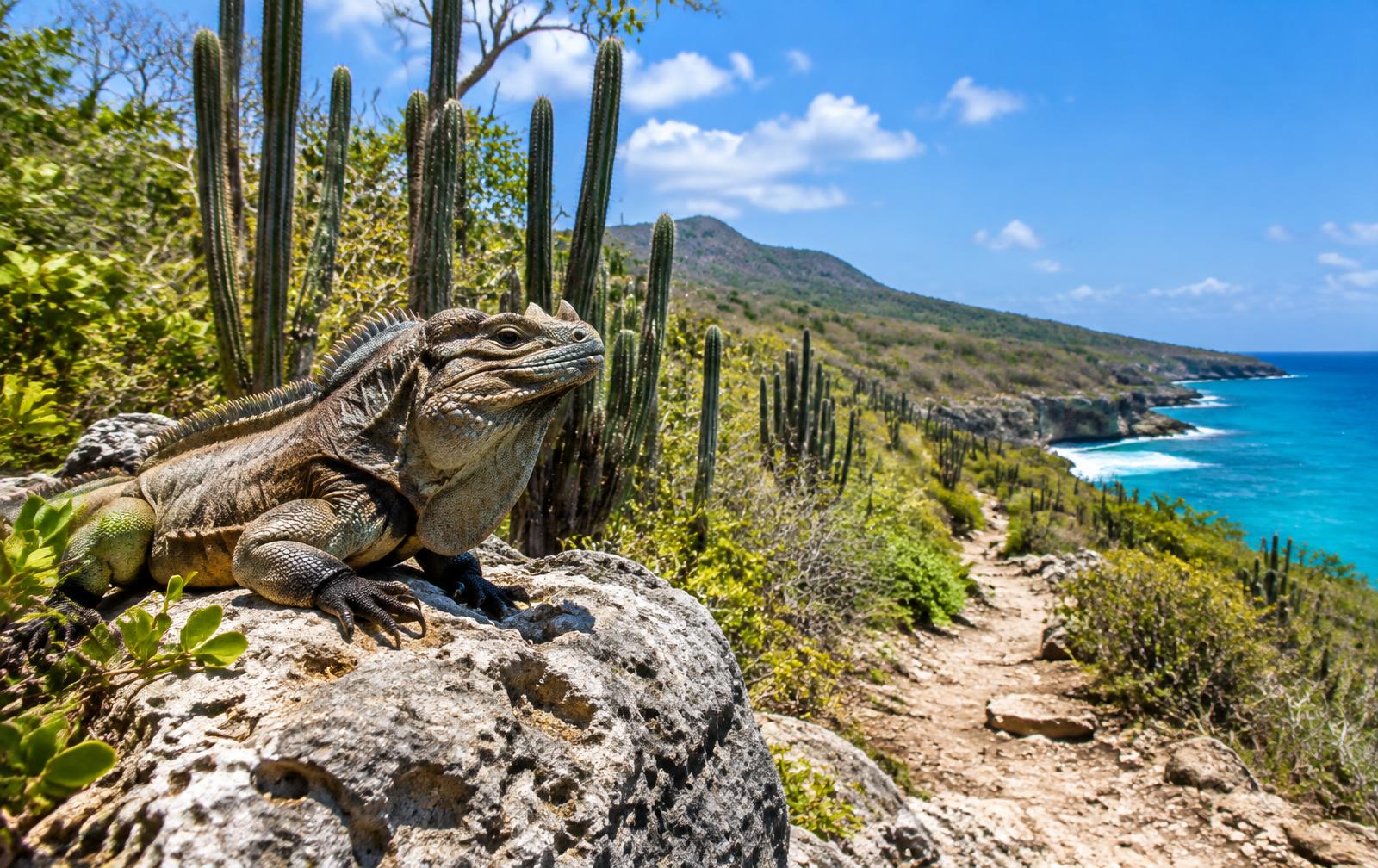
Endemic iguanas, sea turtles nesting on remote beaches, flamingos and many endemic birds.
What to See: Key Attractions & Landscapes
Beyond the world-famous Bahía de las Águilas, Jaragua National Park offers a stunning diversity of sights. Explore the impressive karstic terrain, a limestone landscape dotted with sinkholes and sharp rock formations. Discover traces of pre-Columbian history in the park's numerous Taino caves, such as El Guanal and Cueva de la Poza, which contain ancient pictographs and petroglyphs. The park’s ecosystems range from dense, thorny dry forests and scrublands, home to unique cacti, to vital coastal mangroves surrounding Laguna de Oviedo. The coastline itself is a mosaic of pristine sandy beaches, rocky shores, and vibrant coral reefs, making it a paradise for nature lovers, history buffs, and adventurers alike. Each area presents a different facet of the Dominican Republic’s incredible natural and cultural heritage, waiting to be explored with a knowledgeable guide who can reveal its deepest secrets and stories.
Best Time & Conditions to Visit
The ideal time to visit Jaragua National Park is during the dry season, which typically runs from November to April. During these months, you can expect sunnier skies, calmer seas, and less rainfall, creating perfect conditions for boat excursions to Bahía de las Águilas and Beata Island, as well as for hiking the park's trails. The shoulder months of May and October can also be pleasant, with fewer visitors. The wetter season, from June to September, brings more frequent but usually short-lived rain showers, resulting in lusher, greener landscapes. This period can also be rewarding for wildlife enthusiasts, though boat travel may occasionally be affected by weather. Regardless of the season, the sun is strong, so sun protection is essential year-round. For specific wildlife sightings, such as sea turtle nesting, it's best to consult with your tour operator for optimal timing.
How to Get There from Cabo Rojo & Pedernales
Jaragua National Park is highly accessible from the Cabo Rojo and Pedernales areas, which serve as the primary gateways. From hotels in Cabo Rojo or the Port Cabo Rojo cruise terminal, the main park entrances are just a short drive away. To reach the iconic Bahía de las Águilas, the journey typically involves a drive south from Pedernales to the small fishing village of La Cueva, where you'll board a boat for a scenic coastal trip to the beach. For Laguna de Oviedo, the access point is near the town of Oviedo, located east of Pedernales along the main highway. Many of the park's interior trails and remote coastal areas are best reached with a 4x4 vehicle due to rugged road conditions. The most convenient and reliable way to navigate the park is by booking a guided tour, which includes suitable transportation, boat arrangements, and access to the best locations.
Practical Tips for a Great Experience
To make the most of your Jaragua adventure, preparation is key. The sun in this region is intense; always bring high-SPF, reef-safe sunscreen, a wide-brimmed hat, and sunglasses. Pack at least two liters of water per person and some snacks, as facilities within the park are minimal. Wear lightweight, breathable clothing, preferably long-sleeved, for sun and insect protection. Sturdy, closed-toe walking shoes are essential for exploring rocky trails and caves, while water shoes are useful for coastal areas. Bring a camera to capture the stunning scenery and binoculars for birdwatching. While some local vendors may be present near access points, it’s wise to carry small denominations of cash. For a richer experience, consider a guided tour with our certified experts, available in English, Spanish, German, French, Italian, and Portuguese, who can safely guide you and share invaluable insights into the park's ecology and history.
Park Rules & Responsible Travel
As the country's largest protected area and a UNESCO Biosphere Reserve, Jaragua National Park requires visitors to adhere to strict conservation rules. Follow the principle of 'Leave No Trace': pack out everything you bring in, including all trash. Do not touch, feed, or disturb any wildlife, from the iguanas on the shore to the birds in the sky. It is strictly forbidden to remove any natural elements, such as shells, corals, rocks, or plants. To protect the fragile marine ecosystems, please use only reef-safe sunscreen. Always stay on designated trails to avoid damaging sensitive flora and fauna, including unmarked sea turtle nests. By hiring official, licensed tour operators like us, you support the local community and ensure your visit contributes positively to the park’s preservation efforts. Your responsible behavior helps protect this irreplaceable natural treasure for future generations to enjoy.
Which Tours to Combine for a Fuller Itinerary
Maximize your time in the southwest by combining different excursions. A classic combination is the Bahía de las Águilas tour with a visit to the nearby Taino caves. This allows you to experience both the region's top natural wonder and its deep cultural history in a single, efficient day trip. Another popular pairing is an exploration of Laguna de Oviedo—with its flamingos and mangrove channels—followed by a refreshing swim at a local river spring. For those with more time, a multi-day itinerary is highly recommended. You could dedicate one full day to the pristine beaches and boating of Bahía de las Águilas and a second day to the unique ecosystem of Laguna de Oviedo. This relaxed pace allows for deeper immersion. Consider also adding a trip to the scenic Hoyo de Pelempito viewpoint in the neighboring Sierra de Bahoruco National Park for a completely different mountain perspective on the region.