Cave landscapes and cultural heritage
Caves and Taíno Heritage in Jaragua: What Visitors Should Know
Understand Jaragua’s cave landscapes and Indigenous heritage before planning a visit from Cabo Rojo or Pedernales. Distinguish a cave stop from deeper exploration and clarify access, walking and interpretation.
Decide what kind of cave visit you mean
A cave stop can add a different dimension to a trip based in Cabo Rojo or Pedernales. Instead of another beach photograph or wildlife checklist, it can invite you to look at the landscape as a place with a human history. But the word cave does not describe one standard activity. Looking at an opening, following an agreed visitor section and undertaking a deeper underground exploration are very different experiences.
Begin with the actual proposal: where the visit takes place, what you would see and how you would move through it. A photograph of a large chamber does not establish that the booked outing enters it. This guide helps you ask useful questions and understand the cultural setting; it does not establish current permission to enter a named cave or add an underground activity to an existing tour.
Jaragua is a cultural landscape as well as a nature destination
The Jaragua National Park guide introduces the southwest’s varied coastal and terrestrial environments. Its limestone landscapes also contain archaeological sites, including rock art in caves and shelters. An opening in the rock can therefore be more than a scenic feature. Understanding its context means considering what is known about past human activity alongside the landscape you can see today.
The park’s name recalls Xaragua, one of the Taíno territorial divisions of Hispaniola. Taíno heritage is an important part of the regional story, but a modern park boundary and a historical territory are not interchangeable. Nor should every archaeological trace automatically be assigned to one people or one moment in time. A careful explanation distinguishes a documented observation, an archaeological interpretation and a story offered to help visitors imagine the past.
Rock paintings and engravings are different kinds of evidence
A pictograph is an image made with pigment on a surface; a petroglyph is worked into the rock by carving or engraving. Both terms describe how an image was made, not its exact age or meaning. The distinction can help you follow a guide’s explanation without expecting every cave to contain the same kind of art. A cave name in a regional description is not proof that a particular panel is included in your visit.
Jaragua’s archaeological descriptions mention places such as Guanal and La Poza. Treat those names as background, not as an open-access itinerary. Ask what evidence supports the explanation at the actual visitor stop. A figure resembling a person or animal does not by itself settle its original significance. Research at other Dominican cave sites cannot supply a date for a Jaragua panel, and the age of a settlement cannot simply be transferred to every image nearby.
Read the confirmed tour rather than imagining an entire cave system
The existing Jaragua nature and wildlife tour describes a coastal-cave stop with Taíno history as part of a broader nature outing. That description is a starting point for discussing the proposed experience. Ask for the named visiting place, whether the stop involves an entrance or an interior section, how the cultural material is presented and the time available there.
A general nature excursion should not be assumed to include a specialist archaeology session, a deep chamber, climbing, crawling or technical caving. If a particular feature matters to you, explain it before booking and request a clear answer. A provider may need to assess whether that interest fits the advertised itinerary or requires another arrangement. If the feature cannot be confirmed, choose the outing for the experience that can actually be described.
A lagoon visit and a coastal-cave stop are separate route questions
The Laguna de Oviedo guide also mentions cultural interest within its broader lagoon setting. Do not assume that every cultural reference in Jaragua describes the same stop. A boat outing, a landing on a cay and a terrestrial walk involve different access arrangements. Ask which place the proposal reaches and what the visit permits, rather than combining photographs from several locations into one expectation.
If you want to connect natural and cultural interests, use the Jaragua and Sierra de Bahoruco comparison to keep the overall journey realistic. Establish one clear main outing before discussing additions. A shared park name does not make all visiting areas adjacent, and a transfer does not reserve a guide or authorize entry. Agree the complete route and return rather than adding an unconfirmed cave stop along the way.
Match the approach and interior to your group
Ask about the whole approach, including distance, exposed ground, uneven rock, steps, low sections and the intended stopping point. Discuss lighting and whether the visit remains near natural daylight or uses provided equipment. Do not assume a broad entrance means a level route, or that a short stop avoids difficulties with walking and balance. A description of the surface is more useful than a general label such as easy or adventurous.
The limited-mobility excursion guide helps you describe assistance needs and prepare specific questions. Families should discuss children’s ages and the actual route with the provider. A private arrangement can sometimes change the pace, but it does not remove physical barriers or establish that a site is suitable. Choose an agreed visiting format that works for everyone, with a clear option to stop if the conditions do not match the plan.
Look without touching or changing the site
View cultural material from the permitted visitor position. Do not touch images, wet a surface to make a mark clearer, trace a shape, add a name or move objects for a photograph. Leave stones, fragments and other material in place; their location can be part of the evidence. If something appears significant, tell the guide rather than handling it or announcing a new discovery.
Follow the current site instructions and stay within the agreed visiting area. Ask how photography, lighting and equipment are managed before using them. A photograph is not worth altering a surface or stepping beyond the permitted route. Keep food and waste contained, avoid disturbing wildlife and take everything you brought away. Respect applies to the entire cave environment, not only to a visibly marked panel.
Prepare for the visit that has actually been agreed
Use the Cabo Rojo packing guide and adapt it to the confirmed approach. Ask about footwear, sun exposure before reaching the stop, drinking water and the equipment actually supplied. If a provider describes a need for special equipment or skills, clarify whether the proposed activity is still the visitor experience you intended. Owning a headlamp does not establish that a route is permitted or suitable.
Confirm your exact meeting point, transport, guiding language, visiting time and planned return together. Give any onward travel or ship deadline at the start of the enquiry. Ask how weather, route conditions or access changes would affect the booking. Avoid a timetable so tight that the group feels pressure to hurry through a site or continue beyond its agreed limits.
Choose interpretation over a promise of spectacular images
Tell the provider whether your interest is cultural history, landscape, photography or a balanced nature day. Ask what interpretive support is available and whether the guide can explain the difference between established information and uncertainty. A useful visit does not depend on a dramatic underground chamber or a claim to know the meaning of every motif. Time to observe the setting and ask questions can be the most memorable part.
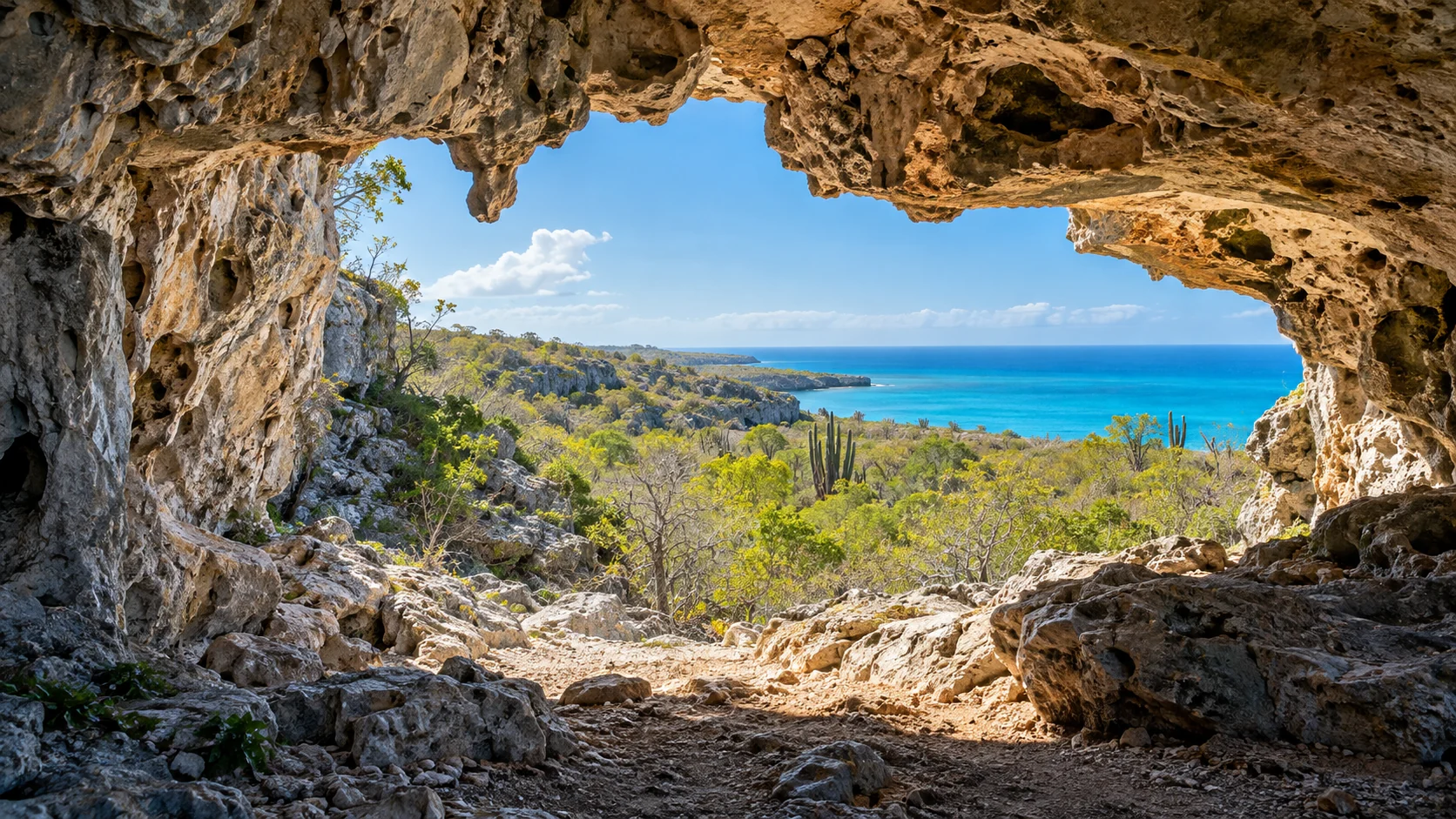
The cover is a unique AI-generated illustration inspired by a limestone cave entrance and dry vegetation in the Dominican southwest. It is not a documentary photograph of a named cave, a record of archaeological art, an access map or proof of a particular tour inclusion. No archaeological markings have been invented for the cover. Plan from the confirmed description and current arrangements rather than the illustration.
Questions before booking a cave and heritage visit
Is every cave mentioned in a guide open to visitors? A published name does not establish current access. Does every Jaragua outing include visible rock art? Ask what the actual itinerary covers. Can I enter independently? Do not infer permission from a photograph, an old account or the absence of a barrier. Is specialist equipment required? That depends on the precise activity; do not treat a visitor stop and technical exploration as the same thing.
Send your dates, accommodation, group size, language preference and cultural interests through the contact page. Request the named site, visiting format, access arrangements, physical requirements, guiding, inclusions, complete quote and change terms. If a particular visit cannot be confirmed, discuss another clearly described option rather than assuming a substitute cave is equivalent. An enquiry becomes a booking only when the provider confirms the arrangements.
Plan a nature outing with time for cultural context
Explore the existing Jaragua excursions, then tell us your interests and group needs. Confirm the visiting place, format and services before booking.
Explore local tours