Photography and trip planning
Photography in Cabo Rojo and Pedernales: Beaches, Wildlife and Sunsets
Choose between coastal landscapes, wildlife and mountain views. Plan photography outings from Cabo Rojo or Pedernales with realistic timing, practical equipment and respect for the places you visit.
Start with the photographs you actually want to take
Cabo Rojo and Pedernales, in the Dominican Republic's southwest, offer very different photographic subjects within the same region: pale beaches, coastal rock, dry vegetation, lagoon birds and mountain landscapes. Choose one main interest before choosing an excursion. A pleasant beach day with a few photographs has a different rhythm from waiting for wildlife or spending an evening composing a coastal landscape. Neither requires professional equipment, but each needs a different use of your available time.
Make a short list of priorities and tell your companions what they involve. If you want a quiet period to watch changing light, agree how much waiting suits everyone. If you want pictures of birds, accept that an animal may stay distant or out of sight. This guide helps you plan the outing around your pictures; it does not identify guaranteed wildlife locations, grant access to restricted viewpoints or promise particular weather.
Bahía de las Águilas: photograph the landscape without rushing the beach day
For a broad coastal scene, Bahía de las Águilas gives the beach visit a clear photographic focus. Think about the relationship between shoreline, water and sky rather than trying to include everything in one frame. From a permitted, stable place on land, try both a wide view and a simpler detail, such as the meeting of sand and water. Avoid stepping onto vegetation or climbing rock to copy an angle you have seen online.
Treat the boat journey, landing and beach time as separate parts of the visit. Keep equipment packed when boarding or when the boat operator needs your attention; handling a camera must not interfere with a handhold or instructions. Ask how much time ashore is planned and where belongings can be kept while you swim. A dry bag helps protect against splashes but should not be treated as a guarantee against immersion. Take your photographs, then put the equipment away and enjoy the beach.
Late coastal light: golden hour is not the same as sunset
Golden hour describes the softer light around a low sun, while sunset is the moment the sun disappears below the visible horizon. Your chosen foreground may look best before that moment. The direction of the sun changes through the year, and the coastline, terrain and clouds affect what you can see. Do not assume every viewpoint faces a sun setting into open water or that a timetable printed for another date will suit your visit.
If this is your priority, compare the Cabo Rojo sunset and photography outing. Confirm the date-specific pickup, the proposed setting, walking surface and return arrangements before booking. Ask whether the available time allows you to stay at one viewpoint rather than move repeatedly. Composition tips are different from a formal photography workshop; explain the help you want. No guide can guarantee a clear horizon, colourful clouds or the exact photograph you have imagined.
Wildlife photographs: distance and patience matter more than a close-up
The setting around Laguna de Oviedo introduces a different challenge: subjects may be moving and far from the permitted route. A phone can record the landscape and the experience even when a small animal fills little of the frame. A lens with a longer focal length can help with distant subjects, but heavy digital zoom often loses detail. Ask what the actual excursion involves and whether there is time to observe from agreed stopping points; do not expect a boat or group to follow an animal for your picture.
Keep a respectful distance and let the guide or boat operator determine the approach. Never feed, surround, touch or provoke wildlife, and avoid using sound playback or flash to obtain a reaction. A useful photograph can show an animal within its habitat rather than isolate its face. The Jaragua and Pedernales iguana guide explains the distinction between possible encounters and promised sightings. If the animal retreats or changes behaviour because of you, step back and stop pursuing the photograph.
Mountain landscapes: allow time for the view to change
Hoyo de Pelempito offers a mountain-landscape alternative to coastal photography. The journey and the time at the viewpoint are different parts of the outing. Ask how long is available for looking and photographing once you arrive, and what happens if visibility is poor. Cloud can hide part or all of the landscape; an early departure is a planning choice, not a guarantee of an unobstructed view.
Try a broad composition first, then look for layers of vegetation, ridgelines or changing light within the permitted viewing area. Photographing scenery from a lookout is different from a specialist birdwatching visit, which may require different stops, pace and guiding. Do not add a lengthy wildlife session to a viewpoint itinerary without agreeing it beforehand. Bring a layer and suitable footwear, protect equipment from moisture and keep clear of edges while concentrating on your screen or viewfinder.
Phone or camera: carry equipment that suits the outing
For beach landscapes and travel memories, a charged phone may be all you need. Clean its lens, check storage and learn how to adjust exposure before leaving your accommodation. A camera with optical zoom offers more flexibility for distant subjects, but it also adds weight and needs protection during transfers and boat rides. Bring equipment you know how to use; a complicated setup that delays your group may give you fewer useful pictures than a simple one.
A small cleaning cloth, spare battery or power bank and a protective bag are usually more practical than carrying every accessory. A tripod is optional: ask whether the ground, available space and excursion pace suit one, and never place it across a path. Keep straps secured and avoid changing lenses in windblown sand or spray. Use the Cabo Rojo packing guide for the wider beach, boat and mountain checklist rather than treating camera equipment as your whole preparation.
Plan around photography time, not just driving time
For one free afternoon, choose a coastal subject and one agreed stopping area rather than collecting a long list of viewpoints. For a full day focused on wildlife, prioritise observation time and allow for periods when little happens. If you have two days, separating a beach outing from a mountain or lagoon visit usually leaves more room for unhurried photographs. These are planning approaches, not fixed routes or confirmed combinations.
Ask for pickup, travel, walking, observation and return time to be explained separately. A standard excursion includes the experience described in its programme; it does not automatically include extended waits or additional locations for photography. Confirm any adjustment, its price and whether it affects other guests. For a late outing, arrange the return before setting out. Cruise passengers should only consider it when the operator has checked the actual port schedule and a suitable return buffer against the ship's all-aboard time.
Respect access, people and protected places
An attractive photograph on social media does not establish that a route is open, that land is public or that a viewpoint is suitable for visitors. Use agreed access and stay on permitted paths. Do not move plants, stones, archaeological material or animals to improve a composition. Keep well back from unstable edges and never step backwards while looking through the camera. If you want someone to pose, ask first and accept a refusal without pressure, especially when photographing children or people going about their work.
Drone photography is a separate matter from carrying a phone or camera. Do not assume a tour booking includes permission to launch, fly or film. Protected-area conditions, aviation requirements, nearby operations and land access may all matter; obtain the necessary current confirmation before bringing a drone for use. Where permission is unclear, leave it packed. A ground-level photograph made without disturbing people or wildlife is a better result than an image obtained by ignoring a restriction.
Questions visitors ask before a photo outing
Do I need a professional camera? No: a phone can work well for landscapes and personal memories, while distant wildlife presents different limitations. Should I bring a tripod? Only if it suits your intended pictures and the agreed visit; it is not essential for a normal beach day. Is a sunset outing suitable for non-photographers? It can be, provided everyone is comfortable with the walking, stopping time and return arrangements rather than expecting a different activity.
Can I combine beach time and sunset? Possibly, but confirm the actual finish of the first outing, travel, a break and the next pickup instead of assuming they connect. What if it is cloudy? Ask about current conditions and booking terms; cloud can change the light, and rain or other conditions may require a changed plan. Will I get wildlife close-ups? There is no guarantee. Can I use the same plan every month? Recheck daylight, access and conditions for your dates.
Choose the experience around your interests
Before enquiring, write down your dates, accommodation, group size, main subjects and the equipment you expect to carry. Add whether you want occasional photo stops, longer observation periods or simple composition advice. Mention walking or boarding requirements and the latest acceptable return. Send these details through the Cabo Rojo Tours contact page so the proposed excursion can be assessed against your actual priorities, rather than a generic request for the best photo spots.
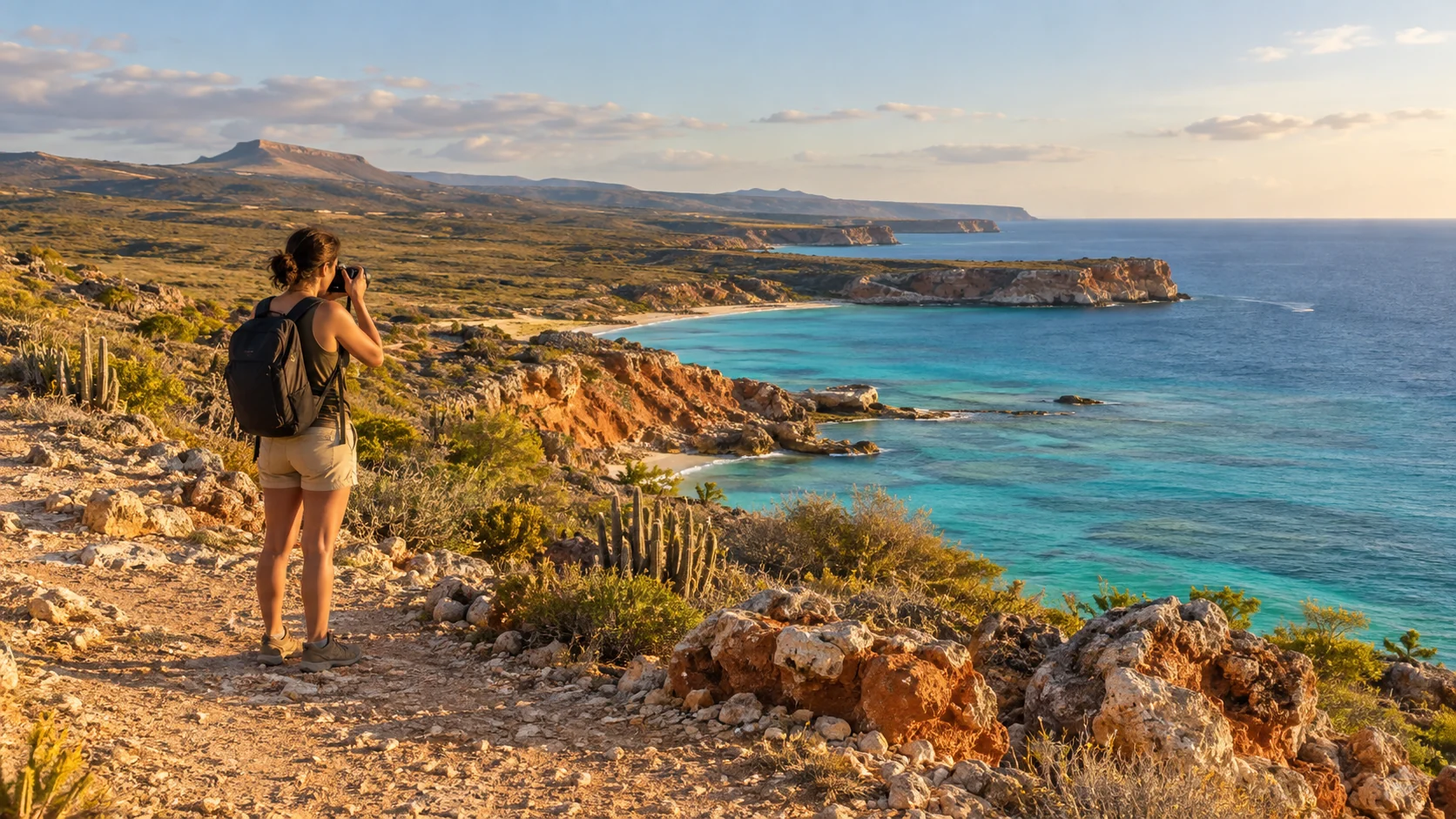
A successful outing need not produce a dramatic sunset or a rare animal portrait. A thoughtful image of the coast, a distant bird in its landscape or a shared moment with companions can tell the story of your visit. Leave room to watch without photographing, keep expectations flexible and choose an outing you would enjoy even if the light changes. This article's cover is an AI-generated illustration of coastal photography in the region, not documentary proof of a particular viewpoint, access route or promised conditions.
Plan a Cabo Rojo photography outing
Compare the sunset and photography tour, then confirm your dates, preferred subjects, walking requirements and the time you would like for photographs.
Explore local tours