Rock iguanas and responsible wildlife watching
Iguanas in Jaragua and Pedernales: A Wildlife-Watching Guide
Learn about the region’s rock iguanas and compare a lagoon outing with a nature walk. Understand what a tour description can promise and how to observe and photograph wildlife respectfully.
A wildlife encounter, not a guaranteed attraction
Iguanas are part of the appeal of a nature visit in the Dominican southwest. Their heavy bodies, textured scales and unhurried movements can make an encounter memorable even for travellers who did not arrive with a wildlife checklist. In Jaragua and the wider Pedernales region, the interesting question is not simply where an iguana photograph was taken, but which habitat and permitted visitor route your outing will actually reach.
Start with a clearly described experience rather than a promise of animals waiting at a stop. A lagoon excursion and a walk through dry vegetation can both involve wildlife observation, but they have different journeys and physical requirements. No guide can guarantee the behaviour or appearance of a free-ranging animal. A worthwhile outing should still offer landscape interpretation and time to appreciate the habitat if a particular species is not seen.
Two rock-iguana names to understand
The rhinoceros iguana (Cyclura cornuta) and Ricord’s rock iguana (Cyclura ricordii) are distinct species native only to Hispaniola. They are not two names for the same animal. The rhinoceros iguana takes its name from horn-like features on the snout, which can be more pronounced in males. Ricord’s iguana has a much more restricted distribution. Learn the names as a starting point for a conversation with your guide, rather than treating them as a two-species checklist.
Colour, size, age, light and the angle of a photograph can make casual identification difficult. Ask a knowledgeable guide what features support an identification, and accept uncertainty when the view is poor. Do not move closer to inspect an eye or face, turn an animal around or ask someone to handle it. A regional species description is useful background; it is not evidence that both species occur at every visitor stop.
Why the habitat matters as much as the animal
Rock iguanas belong to the living landscape of the southwest. Native vegetation provides food and shelter, and feeding on plant material and fruit can help disperse seeds. Looking at the vegetation around an animal adds meaning to an encounter: this is a relationship between wildlife and habitat, not a display arranged for visitors. A quiet explanation from a guide can be more rewarding than trying to obtain the closest possible photograph.
Habitat loss and poaching are among the conservation pressures facing these iguanas. Remaining on permitted paths, leaving plants and natural objects in place and declining wildlife handling are practical visitor choices. The Jaragua National Park guide explains the wider protected landscape. Do not assume that conservation areas, restoration plots or research locations are public attractions or included in a tour.
Discover Jaragua's dry forest and plant life to understand the cacti, trees and habitats that give a nature walk around Cabo Rojo its character.
What an Oviedo lagoon outing can involve
The Laguna de Oviedo destination guide introduces a boat-based visit with lagoon scenery and wildlife. The existing Oviedo wildlife tour describes rhinoceros iguanas as part of its cay visit. Read the actual proposal for your date and ask whether a landing is planned, which permitted visiting area is involved and how the day is organized. The name of a cay is not a guarantee of a particular encounter.
A record of rhinoceros iguanas at an Oviedo cay does not establish Ricord’s iguanas at that same stop. Keep regional information separate from what the proposed route can reasonably address. Ask your guide about the animals associated with the actual visiting area and recent observations, while understanding that wildlife can remain out of sight. Agree what happens if a landing or part of the itinerary cannot proceed; a boat reservation alone does not guarantee every possible stop.
Compare the short and long Laguna de Oviedo boat routes before confirming your trip.
How a dry-forest nature walk differs
A terrestrial outing puts the emphasis on the vegetation, landscape and wildlife observed along a walking route. Compare the Jaragua nature and wildlife tour if that format appeals to you. Ask for the actual area, expected walking, terrain, shade and time for observation. A broad park description does not identify one universal entrance or establish that every trail includes the same habitats and animals.
Tell the provider whether you want a balanced nature walk or have a particular interest in iguanas. A specialist request may need separate assessment, and it must not lead to a promise of finding a rare animal or entering restricted habitat. The Jaragua and Sierra de Bahoruco comparison helps place this interest within a wider nature itinerary. Choose an appropriate experience rather than adding an unconfirmed wildlife stop to an unrelated tour.
Observe without feeding, touching or blocking the way
Allow animals to continue their normal activities. Follow the guide’s instructions, give an iguana space and avoid surrounding it with people. Keep its route to cover open and step back if your presence appears to interrupt it. A stationary animal has not invited closer contact. Do not approach burrows, search shelters for hidden animals or ask a guide to draw one out for the group.
Never offer food, hold out fruit for a photograph, touch an iguana or encourage a child to pet it. Feeding changes the encounter and can draw animals toward people; handling is not part of respectful wildlife watching. If an animal moves away, let it go. Keep snacks and waste contained and leave with everything you brought. There is no need to turn a natural observation into a close-contact activity.
Photograph the scene without changing it
Use the distance your guide considers appropriate and work with the view available. A zoom lens or binoculars can help you appreciate details without stepping off a permitted path. Photographing the animal in its surrounding vegetation can tell a fuller story than a tight portrait. Do not clear branches, reposition stones, crowd a shelter entrance or ask another person to make the animal face the camera.
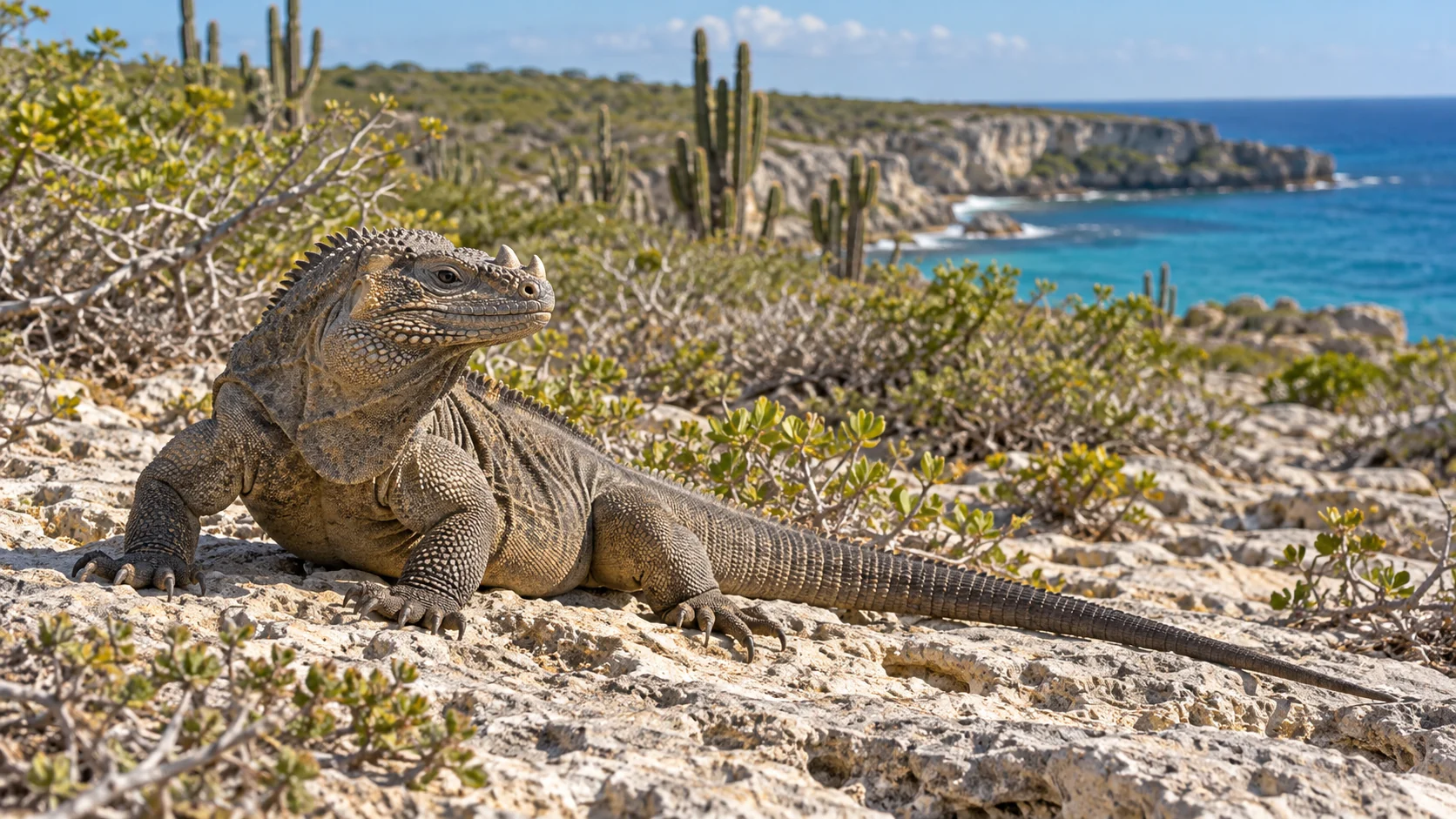
Let the group take turns from an appropriate observation position rather than closing in together. If the photograph would require disturbing the animal, choose a different image or put the camera away. The cover is a unique AI-generated illustration inspired by a rhinoceros iguana in a Dominican southwest dry landscape. It is not a documentary sighting, an identification plate, a photograph of a specific visitor stop or a promise that a tour will produce that view.
Choose a format that works for your group
A lagoon visit may involve stepping into a boat and landing on an uneven surface. A dry-forest outing may involve rocky ground, heat and longer walking. Neither the word nature nor a wildlife photograph describes those demands adequately. Ask about the actual boarding arrangement, seating, walking surface, shade, toilets, breaks and time in the vehicle. Describe any assistance that your group would need.
Families and people with limited mobility have different needs, so use the limited-mobility excursion guide to prepare specific questions. A private arrangement may allow a different pace, but it does not remove physical barriers or guarantee a route can be adapted. For children, agree a simple rule before the outing: watch quietly, keep hands and food away from wildlife and follow the guide rather than an animal.
Prepare for the complete outing
Use the Cabo Rojo packing guide and adapt it to the confirmed activity. Check footwear, sun protection, drinking water and a practical way to protect your camera during a boat segment. Ask whether binoculars, refreshments and park access are included. Do not pack food with the intention of attracting wildlife or assume that an equipment photograph means that item is supplied.
Give your exact accommodation or meeting point and confirm transport, departure, visiting time and return together. Wildlife observation time is different from time spent reaching a park or boarding a boat. Ask about current route conditions and how weather or access changes would be handled. Avoid arranging a second excursion so tightly that the group feels pressure to rush the observation or demand an encounter.
Questions before planning an iguana-focused visit
Will we see both species? Do not assume so; ask which species is relevant to the named visiting area, without expecting a guarantee. Does every Oviedo outing include a land visit? Confirm the actual itinerary and current arrangements. Can children feed or touch the iguanas? Plan observation without contact or feeding. Is a research or conservation site open to tourists? Only a specifically confirmed, permitted visitor arrangement establishes access.
Send your dates, base, group size, language preference and wildlife interests through the contact page. Ask for the proposed area, format, guiding, physical requirements, inclusions, full quote and change terms. Explain that you want responsible observation and would value an honest account of what is realistic. An enquiry becomes a booking only when the provider confirms the arrangements; this guide does not create a specialist departure or an additional tour inclusion.
Plan a nature outing around your wildlife interests
Explore the existing lagoon and Jaragua excursions, then tell us your dates and group needs. Confirm the visiting area and services before booking.
Explore local tours