Island nature and protected-area planning
Isla Beata from Pedernales: What to Know Before You Go
Understand Isla Beata's place in Jaragua National Park, its coastal landscapes and wildlife, and what to establish about permitted access, boat arrangements and time before planning a visit.
Where Isla Beata fits into the southwest
Isla Beata is an island off the southwestern Dominican Republic, separated from the Barahona Peninsula by the Beata Channel. It lies within Jaragua National Park, alongside other protected coastal and marine environments. It is not another name for Bahía de las Águilas, an offshore stop automatically included in a beach booking, or the same place as Alto Velo. Understanding that geography is the first step toward deciding whether to enquire about a visit.
Begin with the Jaragua National Park guide for the wider setting. A protected area's name can encompass several separate destinations and access arrangements. Seeing Beata on a regional list does not establish a public landing, regular tourist departure or available excursion. Treat the island as a distinct enquiry, with its own permitted itinerary and transport assessment.
An island landscape with its own character
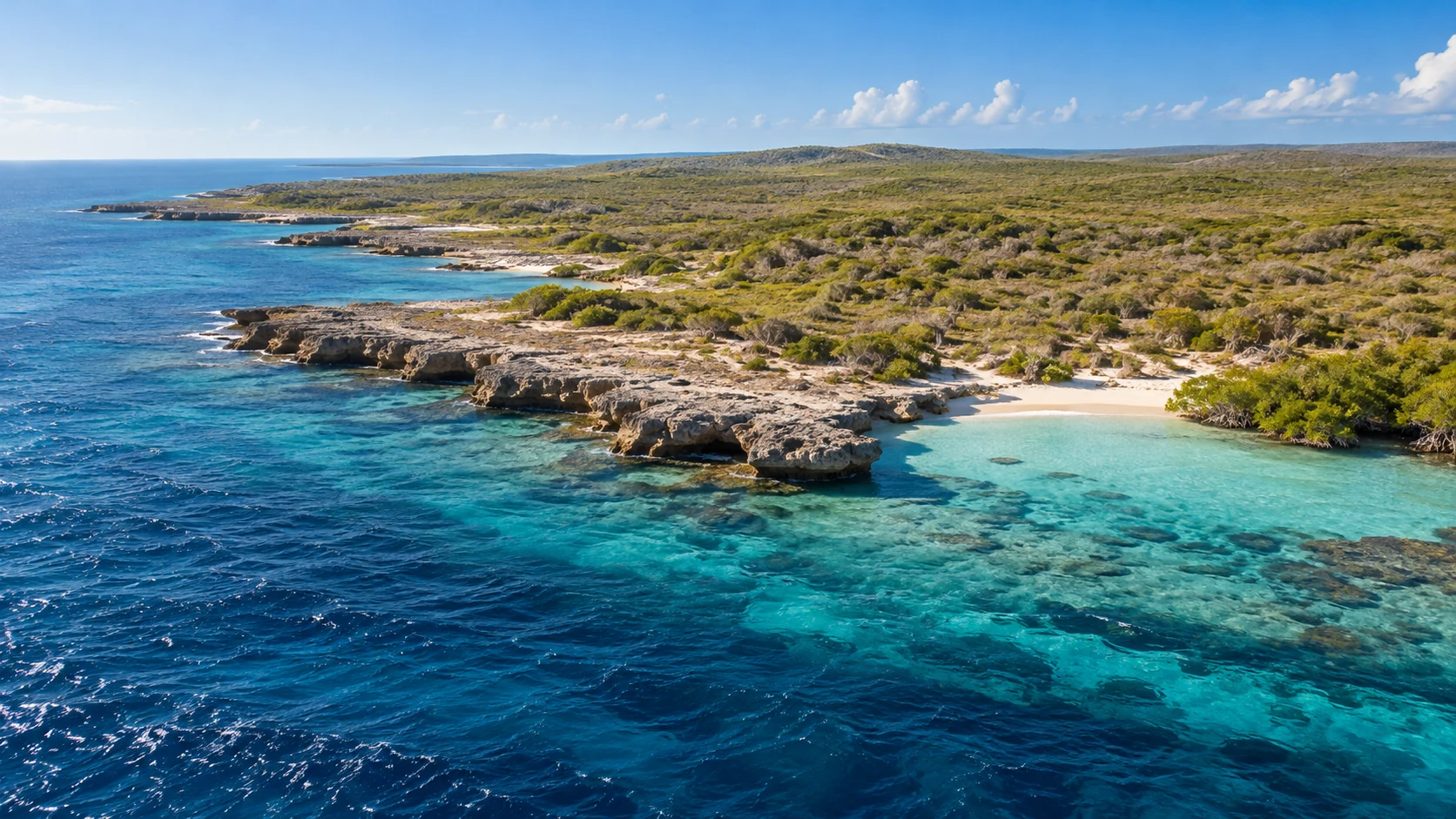
Beata's appeal extends beyond finding another beach. Its landscape includes limestone terrain, dry vegetation and coastal habitats, with mangroves and lagoon environments described in conservation and geological accounts. These settings help explain why it belongs to the region's protected natural heritage. The interest is the relationship between land, shore and sea rather than the facilities of a developed resort island.
An account of the island's habitats is not a promise that every area can be visited. Ask which places a proposed outing would actually reach and what can be observed from the permitted route. Do not build your expectations around exploring the entire coastline, walking across the interior or reaching a particular lagoon. A useful plan identifies what is allowed and feasible for the specific visit.
Wildlife interest without guaranteed encounters
Conservation accounts describe Beata's notable reptiles, including rhinoceros iguanas and the tiny gecko associated with the island, Sphaerodactylus ariasae. That ecological interest is a reason to understand and protect the place, not a guarantee of close encounters. Small or concealed animals may not be visible during a visitor outing. Choose for the landscape and interpretation as well as any wildlife that happens to be observed.
Ask whether an appropriate guide can explain the habitats on the permitted itinerary. Watch quietly, keep distance and do not feed, handle or pursue animals for photographs. Do not ask to uncover reptiles or disturb vegetation to find them. The island's conservation value does not depend on every visitor seeing a particular species, and a wildlife photograph does not establish what a proposed trip will deliver.
Beata and Bahía de las Águilas are different journeys
A visit to the island requires its own boat and landing arrangements. Do not use the familiar Las Cuevas-to-beach crossing as a measure of the complete island outing. A short advertised beach transfer says nothing about the vessel, route, duration or operating decision for Beata. Ask for the actual departure point rather than assuming that every regional boat leaves from the same place.
Read the Bahía de las Águilas visitor guide when comparing options. If your priority is a beach visit with a clearly described existing product, examine the Bahía de las Águilas boat tour. That is a separate excursion; purchasing it does not add Beata. Choose between confirmed plans, not between two photographs that happen to show turquoise water.
Start with permitted access and actual availability
Before arranging transport, ask a knowledgeable provider who can confirm current permission, any restrictions, the intended landing and the areas visitors may enter. Establish whether appropriate accompaniment or additional authorization is needed for the proposed date. This guide does not announce that the island is open for unrestricted tourism, identify an unverified landing point or publish a standing departure schedule.
Request a specific answer about whether a visit can be arranged at all before comparing prices. The existing Jaragua nature tour describes a different activity and should not be treated as an Isla Beata booking. If that mainland experience better suits your stay, compare its actual itinerary. If Beata remains the objective, submit a separate enquiry and wait for accepted arrangements.
Assess the whole road-and-boat itinerary
Use Pedernales as your mainland reference, then give your exact accommodation or meeting point. Ask for an itinerary that accounts for pickup, travel to the agreed embarkation point, preparation, the crossing, landing, time ashore and return. Do not infer the duration from a map's shortest line to the island. A proposed number of hours ashore is not the total time away from your accommodation.
Clarify the vessel and passenger arrangements, how boarding and landing work, and what happens if the planned landing cannot be used. Ask who is responsible for the current operating decision and the return plan. The local transport guide helps distinguish road transfers from the excursion itself. A vehicle booking does not reserve a boat, secure island access or confirm a landing.
Match the proposal to the people travelling
Describe children's ages, swimming confidence, walking limitations and anyone who wants to remain out of the water. Ask about time seated, seating and shade, the boarding method, the landing surface and walking on the permitted route. An island description is not an accessibility assessment. Establish whether the proposed outing works for every participant rather than relying on a general label such as easy or family-friendly.
The limited-mobility planning guide provides further questions about assistance and physical access. Agree what happens if someone cannot land or needs to stop early, without assuming they can be left ashore or remain on the boat under any circumstances. Where the necessary arrangements cannot be confirmed, choose a different excursion with a suitable, clearly established format.
Allow room for conditions and fixed return deadlines
No calendar month or attractive photograph guarantees a suitable crossing or landing. Ask how current marine conditions affect the proposal and whether the plan may be changed, postponed or cancelled. Obtain the relevant terms before committing money or connecting transport. The guide to weather-related changes helps you plan alternatives without assuming every other excursion will be available.
Cruise visitors should provide the ship, port call and all-aboard time, then have the provider assess the complete journey and return margin. Do not present Beata as a routine short cruise stop. The Port Cabo Rojo cruise-day guide explains the wider scheduling questions. For overnight visitors, the accommodation-base guide helps organize the mainland portion without implying overnight stays on the island are permitted or offered.
Prepare around confirmed services and protect the setting
Establish drinking water, food, shade, toilets, changing and storage arrangements individually. Do not assume shops, a restaurant, accommodation or staffed visitor facilities will be available at a landing. Use the packing guide, adapting footwear, sun protection and protection for belongings to the actual boat and walking arrangements. Ask whether any water activity is included; landing on an island does not establish swimming or snorkeling provision.
Stay within permitted visiting areas, leave natural objects in place and take all waste back with you. Respect directions protecting vegetation, wildlife and shore habitats. The cover is a unique AI-generated illustration inspired by the island's regional limestone-coast setting, not a documentary photograph of a specific Beata landing, current facilities, wildlife encounter or sea conditions. Use verified current arrangements to make practical decisions, not the illustration.
Questions to resolve before a booking
Can we visit on our dates, and who confirms access? Which departure and landing are proposed? What is the complete pickup-to-return itinerary? Who accompanies us, what services are included, and what is the total quote? What happens if conditions or permission change? These questions come before assuming that an island named in a destination guide is an available bookable product.
Through the contact page, send dates, accommodation or ship, group size, participant needs and the reason you are interested in Beata. Request a specific assessment rather than an assumed extension to another tour. An enquiry becomes a booking only when the provider accepts the actual arrangements. If a visit cannot be confirmed, choose one of the region's established excursions on its own merits.
Plan the right nature outing for your Pedernales stay
Explore the existing excursions, or ask whether a separately arranged Isla Beata visit can be assessed for your dates and group. Confirm permission, transport and the complete itinerary before booking.
Explore local tours