Marine experiences and excursion planning
Snorkeling in Cabo Rojo: Beach Visit or Guided Reef Trip?
Choose between a Bahía de las Águilas beach outing and a guided snorkeling excursion: compare water time, equipment, supervision, group needs and the questions to ask before booking.
Start with the experience you actually want
A beach day and a dedicated snorkeling excursion can both involve a boat, a beautiful coast and time in the water. Their priorities are different. A beach visit centres on reaching the shore and enjoying time there; a guided reef trip centres on observing the underwater environment at stops selected for the outing. In Cabo Rojo and Pedernales, in the Dominican Republic, choose around your main interest rather than assuming that every boat booking delivers the same experience.
Start with the Bahía de las Águilas visitor guide if the bay itself is your priority. If your main goal is guided time looking underwater, compare the Cabo Rojo snorkeling excursion. This guide helps you ask the right questions; it does not add reef stops, equipment or supervision to a booking whose confirmed description does not include them.
A quick comparison: beach time or underwater time?
Choose the beach-focused format when your group wants to relax on the sand, take photographs and decide individually whether to enter the water. The central question is how much usable beach time the itinerary provides. Choose the snorkeling-focused format when the group wants a briefing, equipment fitting and guided underwater observation. The central questions then become the planned water sessions, the entry method and the support provided. Neither format guarantees particular wildlife or visibility.
The Bahía de las Águilas boat tour is the relevant beach option to compare. Read its current inclusions alongside the dedicated snorkeling tour and obtain confirmation for your date. Compare total time from pickup to return separately from beach time or snorkeling time: a four-hour outing is not four hours in the water. Ask how travel, briefing, fitting, breaks and any lunch divide the day.
What a Bahía de las Águilas beach visit includes
A typical bay visit involves a road journey to the boat departure area at Las Cuevas and a coastal boat crossing to the beach. Your confirmed package determines whether transport to the departure, meals, equipment and other services are included. A photograph of someone wearing a mask, or the word snorkeling in a general beach description, does not establish a guided reef session. Ask whether you will be dropped at the beach, accompanied on shore or taken to separate snorkeling stops.
This format can make sense for companions with different priorities because the beach is the shared destination. It still requires checking boat boarding and the practical arrangements for the day. Someone who prefers staying dry needs to understand the crossing and shore landing, not only the beach photographs. Do not assume that a beach visit guarantees suitable swimming conditions or that nearby-looking reef features are appropriate places to swim to.
What changes on a guided reef excursion
The dedicated snorkeling tour currently describes boat-based stops, snorkeling equipment and an in-water guide. Treat these as the starting point for your enquiry, then confirm the actual plan, stop selection and equipment for your group. A guide can explain the outing and help identify what is observed; sightings and the number of usable stops depend on the day. Avoid choosing solely by a photograph of a turtle or a promise of exceptionally clear water.
Ask how participants enter and leave the water at each planned stop, whether a ladder or another boarding method is used, and where breaks take place. Establish who supervises people in the water and who remains aboard. If someone wants to stay on the boat, confirm that this can be accommodated and ask about seating, shade and the return arrangements. A snorkeling boat should not be assumed to have the facilities or freedom of movement of a larger leisure vessel.
Beginners: describe your swimming ability before booking
Being new to a mask and snorkel is different from being uncomfortable swimming in open water. Tell the operator which applies to you, whether you have used fins before and what assistance you need. Ask what swimming ability is expected, how the briefing works and whether equipment can be tried in an appropriate setting before the planned session. The operator needs these details to assess the proposed activity, rather than a simple statement that the excursion is easy.
Confirm the flotation equipment, available sizes and supervision arrangements. Flotation equipment does not remove the need for an individual suitability assessment or make every sea condition appropriate. If the proposed water entry or return to the boat does not work for you, ask about another format before paying. The limited-mobility excursion guide provides additional questions about transfers, boarding and access.
Families and mixed groups: plan for every participant
Give the operator each child's age and relevant swimming experience, and ask about the current participation rules, correctly sized equipment and adult supervision. An advertised minimum age is not proof that a particular outing suits every child above it. Discuss how long the child is likely to remain comfortable, what happens if they want to stop early and whether the rest of the group can continue without separating in an unplanned way.
For a group of snorkelers and beach lovers, compare a shared beach outing with separate activities on different days. Do not assume that a non-participant can be left on an undeveloped beach while the boat goes elsewhere. Agree who stays with whom and where everyone reunites. Use the Cabo Rojo family guide to fit this decision into the wider stay, including meals, breaks and the journey back.
Conditions and wildlife: separate hopes from guarantees
A pleasant beach photograph cannot establish underwater visibility, current conditions or whether a particular snorkeling stop will operate. Ask the captain or operator about the current assessment and how the itinerary changes if entering the water is unsuitable. A season described as relatively dry does not guarantee a smooth crossing or clear water. The seasonal planning guide explains how to keep the broader trip flexible.
Plan to observe what is present without requiring a particular animal encounter. Ask about responsible observation and follow the briefing on keeping distance and avoiding contact with marine life or the seabed. If snorkeling is the main reason for booking, establish whether unsuitable conditions lead to a changed activity, postponement or cancellation and what the agreed terms are. The guide to weather-related changes helps you consider alternatives without assuming that every inland excursion is available.
Equipment, comfort and what to pack
Confirm whether a mask, snorkel, fins and flotation equipment are included in your specific booking, how sizing is arranged and how equipment is maintained. If bringing your own, tell the operator and ask whether there are any requirements or price implications. Familiar personal equipment can be useful, but carrying it does not turn a beach transfer into a guided snorkeling service. Prescription-mask needs and unusual equipment sizes are best discussed before departure.
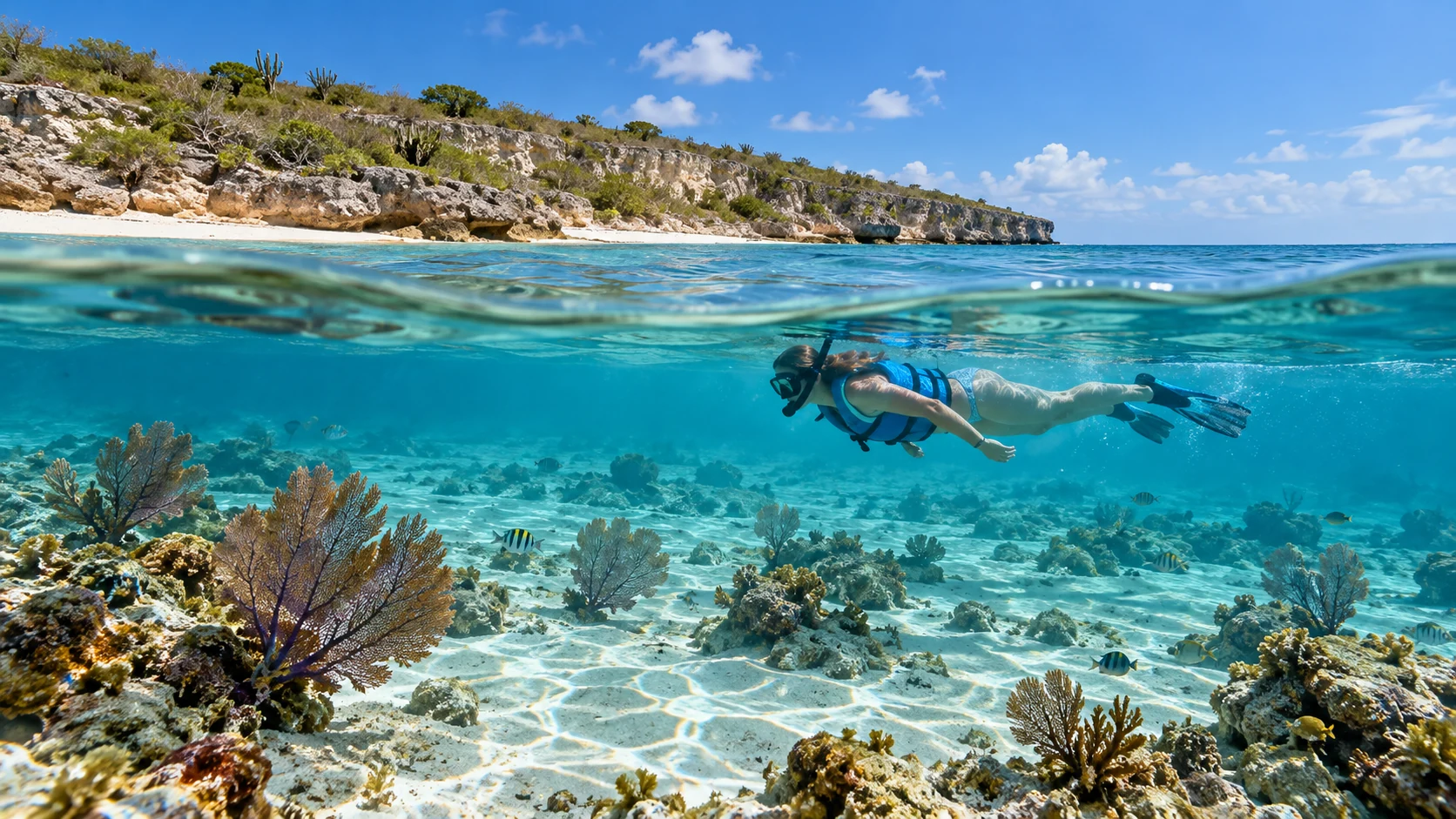
Use the Cabo Rojo packing guide for the wider checklist. For this choice, focus on sun protection, drinking water, a towel, dry clothing and protecting belongings during the crossing. Ask about shade, toilets, changing arrangements and storage rather than assuming they are available aboard or at the beach. Cover image: an AI-generated illustration of a coastal snorkeling setting, not a documentary photograph of a particular reef, tour departure or observed wildlife.
Compare the complete booking, not just the headline price
Ask for a quote stating your accommodation or port, date, group size and chosen activity. Check pickup, boat travel, guiding, equipment, any entry charges, meals and the agreed return. Record what is excluded and whether waiting time or an additional stop costs extra. The travel-budget guide helps compare the full cost without inventing a universal rate for these different formats.
If arriving by cruise ship, provide the all-aboard time and have the operator assess the complete itinerary and return margin. Do not combine a beach visit and reef excursion simply by adding their advertised activity times. The Port Cabo Rojo cruise-day guide explains the wider scheduling questions. For any visitor, obtain a written summary of the chosen experience and the change or cancellation terms before treating the plan as confirmed.
Common questions before choosing
Can I snorkel on a beach visit? Ask what the booked beach activity includes and what is appropriate on the day; do not assume reef stops, gear or supervision. Can a beginner join the guided excursion? Describe swimming confidence and equipment experience so the operator can assess the proposal. Can a companion stay out of the water? Confirm whether they can remain aboard or at an agreed beach location, with suitable arrangements, before booking.
Can we do both in one day? Request a combined proposal with actual travel, briefing, beach time, water sessions and return included; availability and conditions determine whether it works. Which should I choose? Prioritize the beach outing if the bay and relaxed shore time are the main goal, or enquire about the guided reef trip if supported underwater observation is the priority. Tell the operator what would make the day successful for your whole group, then choose the confirmed plan that matches it.
Choose the right Cabo Rojo water experience
Tell us your date, accommodation or cruise ship, group ages and snorkeling experience. Ask for the beach or guided snorkeling format that fits your group and confirm its inclusions.
Ask about your excursion